Conscious Competition

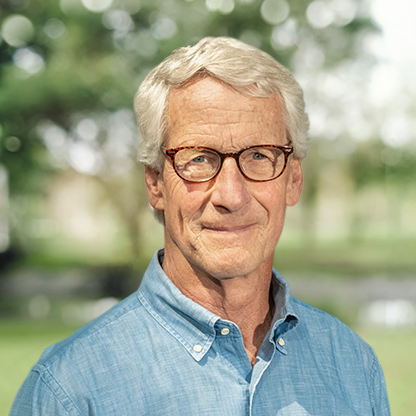
Co-Founder + Coach, Conscious Leadership Group

What can we learn about conscious leadership by playing Euchre with Diana Chapman?

Recently a friend sent me an article about Steph Curry: The Baby Faced Assassin: Can someone be a competitive killer and still be a nice person? (Spoiler alert, the author’s answer is yes and Steph is just that). But, as I read the article I found myself interested in the question: 

Can someone be an intense competitor, even a competitive killer, and still be a conscious leader?

Common questions leaders ask as they begin the conscious leadership journey are, “Will I lose my edge?” or “Will I become soft?” or “Will I lose my desire to compete and win?” Not everyone asks, but for some competing and winning has been definitional to their identity. Like Steph, they are competitive killers.  

For these people, I often begin my coaching relationship with a reflection on the compatibility of being a competitive killer and being a conscious leader. I ask my new clients to identify the benefits and costs of fiercely competing. 

The benefits are often quite clear; they win a lot. They also have great intensity, focus, engagement and stamina. They have honed a set of skills that give them a reliable competitive advantage. They get the payoffs of winning: to the winner go the spoils. 

We then turn our attention to the costs. If they can’t identify any downsides, our discussion usually ends. I’ve learned that if they’re aware only of the upsides, they’ll lack sufficient motivation to explore alternatives. 

For those that are in touch with the downsides they list some variation of the following:

Lack of Sustainability

Living as a competitive killer takes a toll. One toll is physical. Physically, the body pays from lack of sleep, living on adrenaline and dopamine, and sprinting without creating time to recover. Many can and do get away with paying this price in the first stage of their life, but after a certain age the costs to physical health and wellbeing becomes less tolerable.

Relational Impacts

Many competitive killers report that having only this gear speed has cost them many important relationships with intimate partners, friends, business associates and kids. Kids are often the big one; the one they reference in their 50s and beyond when identifying their regrets. It’s the regret of being so mono-focussed that they didn’t spend quality time with their kids. This mindset affected how they parented because they needed their kids to be equally focused, to get top grades so they could get into the right schools, be the best at sports and other activities, be special, unique, set apart, and win.

Disappointment in Results

Again, this often isn’t realized until the game is over. It’s characterized by something like this: “I believed that if I won (money, power, fame) then I’d be ___________ (happy, secure, special, free, content, able to walk away, etc). I was struck that at a recent gathering of billionaires, one asked the other nine: “From 1-10, how happy are you when you wake up in the morning?” None of them had a number above 6. This should interest anyone who is trading off the present for the promise of the future.

So, if you don’t have an adequate reason to explore another way of playing the game, I get it. My counsel would be to keep playing it the way you’re playing it.

If you think there is value in exploring the question,“Is there such a thing as a conscious competitor, as competing above the line?” and, “If I play this way, will I win?” I want to suggest that the answer is yes and offer the following thoughts.

My business partner, Diana Chapman is a great example of a conscious competitor. I remember trying to take a nap in an airport but not being able to sleep because of the trash talking going on a few feet away as Diana was in an all-out battle to determine who would be Euchre champion for the day. For those of you not from the midwest, Euchre is a card game and a quasi-religion all rolled into one. From Indiana, Diana, was baptized into Euchre at an early age. She is a competitive killer while being a conscious leader.

I can hear you saying, “Really, you’re going to compare Euchre, a card game, to my work, to managing money (other people’s money), leading a startup that is hanging on by a thread, research on healing disease, getting to partner in my firm …… all things that involve real people and real money and high stakes?” Yes, I am. Bear with me…

What is conscious competition (competition from above the line)?

1. Full engagement.

Conscious competitors are fully engaged in the game with head, heart, gut and body. They are fully present. They don’t have any desire to be anywhere else doing anything else. They are not distracted or compromised. When it’s game time everything else recedes to the background.

Years ago, I coached John Rogers, the founder of Ariel Capital. John is the answer to the question in the article above about Steph Curry. He is both a killer competitor and a truly nice person. John played basketball for the legendary Princeton basketball coach, Pete Carril. One of the things he brought to Ariel from Carril and Princeton was the idea of game time. What game time means is that when it’s game time you’re focused solely on the game. Our coaching sessions were sometimes during game time. There was no small talk. None. When we met during non-game time John was pleasant as can be and we had fun conversations about what we did last weekend, sports, or politics. Just not during game time.

Not every conscious competitor draws such a bright line between game time and non-game time but they all have a whole body YES, a hell YES to being fully in the game. I have heard many leaders over the years express that they are not fully in the game, certainly not like they used to be. They are questioning, even doubting themselves and the game. It’s an act of vulnerability for them to express these doubts and it also makes them vulnerable to killer competitors who are fully in the game. One investment banker in his mid forties told me recently that if he’s not working 18 hours a day he knows for sure a twenty something who wants his job is.

When the Euchre game is on, Diana is in the game, passionately, purposefully, fully engaged. If you’re not fully in the game—your game—you can’t be a conscious competitor because, quite simply, you’re not fully conscious.

I say all this because some believe that if they compete from above the line they’ll somehow lose their focus and engagement. This isn’t true.

If anything, the more one is devoted to living and working in their zone of genius and living aligned with their greatest purpose (two characteristics of conscious leaders) the more focussed and engaged they are.

2. Intense but not serious.

If you watch Diana play Euchre she is intense but not serious. She is in it to win it. Losing is not an option worth considering.

Again, I hear you, “Of course, Euchre is a game. My career is not a game. My career is serious.”

Many competitive killers are incapable of playing a game, any game, and not taking it seriously. Many of us have witnessed a golfer throw a club, a tennis player break a racquet in a profane laced tirade, or the loser of a board game sulk their way home not talking to anyone for hours. These people are taking games seriously. So it’s not a given that Diana, or anyone, can play a game with great intensity and not take it seriously.

Next I suggest that YOU get to decide what’s a game and what isn’t, what needs to be taken seriously and what doesn’t. Life doesn’t come prelabeled as serious and not serious. You are the labeler.

To take something seriously is to make that thing a referendum on who you are; on your value and worth as a human being. To take something seriously is to invest that something with the ability to determine whether you matter. You’re giving that something the ability to provide you with, or keep you from, experiencing ultimate security. People who go into a rage and throw their golf clubs have, in that moment, made something that isn’t serious, serious. They have made where their ball goes a referendum on their value, their ability to control life and their sense of security and well being. They have given golf a value and power it was never meant to have.

Again, you say, “Of course, we can all see that making golf or Euchre a referendum on who we are is silly. But my job, my relationship, and my children are a referendum on who I am.”

Are they?

If your identity is so fragile that a stock trade, a lost deal, your boss’s disapproval or your partner’s tone of voice throws you into a tailspin you’re not a very conscious leader at that moment. You have outsourced your sense of self to your work or your partner and when you do that you can’t compete from above the line because you’re below the line.

When we make something serious we contract, tighten up, stop breathing, and give into short-term reactive thinking. We stop learning and being available to the moment because we simply have to win, because in that moment winning really is everything. I suggest that when you’re in that state of consciousness you’re not playing your best game. You might be intense because you’ve made something life or death (of the ego) but you’re not conscious.

Conscious competitors have spent great amounts of time stabilizing their sense of self so that it is not so fragile as to be dependent on the results of a game or activity. They have rooted who they are in an unchanging clarity that provides a constant sense of OK-ness. This allows them to be completely present to the game at hand and to be in the game with a tremendous sense of proportionality. They know what matters and what doesn’t.

3. Aware of their deeper motivations.

‍I spent a number of years working with leaders in the investment world. During that time I was exposed to behavioral finance which, simply put, explores and documents dozens of cognitive biases and deviations from rational decision-making. Israeli psychologist Daniel Kahneman was awarded the 2002 Nobel Prize in economics for his contributions to this movement. (As an aside, one commentator said at the time that a psychologist winning the Nobel prize in economics was akin to a history professor winning the prize in physics).

As I worked with leaders I discovered that these cognitive biases were directly tied to deeper motivations. I call these deeper motivations, passions. What I discovered was that it was their passions that gave rise to their distorted thinking. This discovery is what led me to see the value in understanding the cognitive-emotive loop, which describes how our emotions interact with our thinking. Our passions are even deeper than our emotions.

I got interested in passions from my exposure to the Enneagram. In the Enneagram world, passions are a foundational emotional state that control and drive many of our behaviors and thoughts. Feelings, as we talk about them at CLG are short lived, they pass through us. Our passions are more of a condition, an orientation or a whole being state.

The Enneagram identifies 9 core passions—Anger, Pride, Deceit, Envy, Avarice/Greed, Fear, Gluttony, Lust, Sloth—and suggests that each of us is driven by one of these 9 passions, though we can have and are affected by all of them.

When I coached high stakes investors, I was particularly attuned to the passions of greed and fear and at one point I could see how most of the behavioral finance traps were tied to greed and fear. Now as I work with leaders, and competitors from all the various games, I see that all the passions distort thinking and decision making and behaving.

For this reason, I think it is critical for each of us to understand our core passion and how, when activated, it keeps us stuck below the line. When we are in the grip of our passion we are not consciously competing. Trying to be a conscious competitor without knowing and understanding your passion is like running a marathon with a 50 lb weight around your ankles.

Diana would say that her core passion is lust, a lust for more, especially more intensity. If she isn’t aware of her lust it can affect how she plays Euchre. In her desire to want more she can make errors in judgment that could greatly affect how she plays the game.

Competitive killers are all about winning and losing. Somebody wins and somebody loses. Their life is driven by not being the loser. Conscious competitors understand that at the end of the game someone usually has more points than the other, whether those points are dollars, patents, market share, rank and power, or points in a Euchre game. In fact, conscious competitors know that this is part of the fun of the game. Often they don’t like playing games where no one keeps score and everyone gets the same trophy.

But they play as though there is something beyond or, in addition to, the scoreboard. As I said above, they don’t make winning and losing a referendum on who they are. Their identity is not affected by their point total. Because of this, they value learning more than winning. They know that often winning is out of their control but learning is under their control. They play the game to learn and grow. The game, including the points, is a constant source of feedback. And they are feedback junkies.

Often people addicted to winning are driven, not just by their desire to win, but by their desire for others to lose; to crush the competition. Conscious competitors don’t want to crush the competition. In fact, they genuinely want the competition to flourish.

They see their fellow competitors as allies and equals and not as obstacles and impediments that need to be overcome. This view of one’s competitors is critical to being a conscious competitor.

This is because all the greatest conscious competitors understand two things: SUFFICIENCY and ONENESS. Sufficiency is the experience that there is enough. Life, and this game, does not need to be zero-sum. Oneness means that they have a direct, deep, and profound experience that what affects the other affects them and vice versa. The deepest reality for them is that there is no other. There is no one over there to crush.

The conscious competitor has spent years cultivating a deep, reliable experience of sufficiency and through various practices has seen through the illusion of separateness.

I think there is more that we can all learn and explore about conscious competition; my desire here is to begin a dialogue. My personal belief is that our world is ready for a new view of competition and an emergence of people who love to play the game, and who compete intensely and consciously.

  1. Am I willing to explore conscious competition? Unless you have a real YES to exploring this, I strongly suggest that you stick with your current program.
  2. How is my current relationship to competition working? How is it serving me? What is it costing me?
  3. Am I all in with what I’m doing? Am I fully engaged? If not, what is keeping me from full engagement?
  4. Am I willing to stop taking my game and myself so seriously? Am I willing to source the satisfaction of my deepest needs and wants from something more reliable than how I’m performing at the game? What practice will I do to stabilize my sense of self on a foundation that is unshakable?
  5. Am I willing to go beyond win/lose to win for all? Am I willing to see competitors as allies and not obstacles? Am I willing to want them to do their best? What practices will I do to cultivate a deep experience of the oneness that is underneath apparent separation?

Additional Blog Posts

It begins with you.

Whether you’re here to lead with less drama, get better results, or stop repeating the same patterns – you’re in the right place. Start here:

Read the Book

The 15 Commitments of Conscious Leadership is where it all begins. You’ll never see leadership – or yourself – the same way again.

Explore Resources

Access our library of free practices, videos, meditations, and more. Get a feel for the work, and discover what resonates.

Get in the Room

These powerful experiences are open now, no sales call required. Check out what’s available and claim your seat before it’s gone.

Loading...

What would you like to explore?

Brad Keywell

Founder & CEO, Gigawatt.ai

“One key aspect of my experience with CLG has been being shoulder-to-shoulder with somebody who sees me and reflects what they see, without fear.

That reflection has allowed me to understand how I’m showing up – what patterns are at work, what’s actually happening inside of me, not just outside.

It’s a very collaborative lens that has allowed me to understand myself better and ultimately decide how I want to be, what I choose to think, what I choose to let go of.

All that adds up to this beautiful mirror of self-awareness, self-compassion, and self-forgiveness. That’s extraordinary. That’s rare. You don’t find this on a therapist’s couch. You don’t find this on a weekend retreat. I have found this powerfully through CLG.”

Amy Errett

Founder & CEO, Madison Reed

“My leadership is different through the CLG process.

I now have a deeper understanding of how I operate – both my strengths and my blind spots – without blame. That allows me to own those things in front of my team and invite feedback about them.

It has empowered my team in ways I don’t think I was ever doing before. These have been incredibly effective tools — and my team is giving me feedback about that. They see me as a changed leader.

The work I’ve done in CLG has impacted all parts of my life. I understand my patterns, my responsibility for them, and I make choices to change them.”

Yolanda Beattie

Director, Yo&Co

“My time with Kate is like coming home to a warm, safe place where I’m fully seen without judgment.

I’m able to explore and nurture all the tender parts that hold me back and keep me small. She knows how to ask just the right questions to open my perspective and see new possibilities for being and doing, dramatically improving my impact on the world – at work and at home.”

Joel Monk

Founder, Coaches Rising

“Yes, you’ll find powerful distinctions and tools. But the real secret sauce of Conscious Leadership is the embodiment.

You can see the depth of work they’ve done in how they hold space. The models are great but what stands out is the combination of love and challenge, presence and agency.

The work cuts straight to the core very quickly. It’s incredibly deep and also very practical.

I used to say conscious leadership is relevant for our times. I think now it’s a necessity. People need it.”

Photo of David Zilberman

David Zilberman

CEO, GraphiteRX

“I had the privilege of working with Jonathan Basker as my executive coach for several years, and I cannot recommend him highly enough, especially for early-stage founders seeking guidance in their leadership journey.

Jonathan’s approach to coaching is both profound and practical. He has a deep understanding of the unique challenges that startup founders face, and his focus goes beyond mere business advice. Instead, Jonathan excels at supporting founders in building and managing high-performing teams, which is crucial for startup success.

What sets Jonathan apart is his holistic approach to personal and professional development. Jonathan’s coaching philosophy encourages embracing discomfort as a pathway to growth, fostering self-awareness, and maintaining authenticity in leadership.

Throughout our coaching relationship, Jonathan consistently demonstrated his commitment to my success. For early-stage founders looking to elevate their leadership skills, manage team dynamics effectively, and cultivate a thriving organizational culture, Jonathan Basker is an excellent choice. His unique blend of empathy, insight, and practical tools makes him an outstanding executive coach. I highly recommend Jonathan to any founder ready to embrace personal growth and transform their leadership approach!”

Phil Wickham

“Joyce is so present it creates a tangible energy field.

From that presence and the trust she creates, I find myself opening up and watching whatever is eating at me all spill out, often in circuitous, drama-ridden monologues. Joyce then flexes her gift to listen, absorb and find signal. She brings the focus back to the choices and behaviors that are impeding my energy, and awakening me to how I impede the energy of those closest to me. The resulting realization is – ‘Oh, this is on me to make this situation better…’ How Joyce accomplishes that in a way that makes me feel excited – and not threatened – is fascinating and frankly, elusive to me. Together, we find the underlying driver of unconscious choices and then co-develop a targeted behavioral change at the root level.

Joyce navigates me in every session from ‘what’s wrong with the world?’ to helping me see it’s in my power to change any pattern to improve the situation, simply by becoming aware of my choices. So, if you’re willing to have your full self reflected back at you in a remarkable and honest way, if you’re willing to confront the challenging issues in your life, and you’re willing to take full responsibility for creating the improvements you want, Joyce is the coach for you.”

Portrait of Heather Dunn

Heather Dunn

Chief People Officer, Brex

“I’ve worked with Sierra at both Gem and Brex, where she coached and facilitated our executive teams with exceptional impact. I can’t imagine a more powerful partner to help transform how we communicate, collaborate, and lead.

Her superpowers are undeniable: she earns trust instantly, meets us exactly where we are, and challenges us to voice what’s often left unsaid. But her facilitation goes beyond insight – it’s transformative. With a rare blend of challenge, creativity, and heart, she pushes us to embrace candor, step beyond our comfort zones, and experiment with new ways of working together that elevate our leadership dynamic.

At Brex, the language and learnings from our sessions with Sierra have become embedded in our daily leadership dialogue, strengthening our team and driving real, lasting impact.”

Andrew Stirk

Head of Brand, Anthropic; Co-Founder, ReflectiveWorks

“Joyce has helped me to access parts of me that I had blocked. She has helped me to identify and integrate different facets of who I am, in service of who I want to become, unlocking a new sense of agency, potential and aliveness.

In just a few months, I feel more balanced, more confident, and more capable than I have before. She is a gifted listener with a profound sense of intuition.

Joyce gently challenges and pushes me when I am being less than honest. She calls out inconsistencies in my thinking with kindness, and most welcome of all, she helps me laugh at myself when I start taking things too seriously. As a result, she has helped me to identify limiting beliefs and recognize and address patterns of behaviour that no longer serve me.

Joyce is empathetic and kind while bringing a powerful insistence on authenticity and honesty. I look forward to every single session knowing I will feel clearer, calmer and more alive. If you get the chance to work with her, you should.”

Robert Craven

Former CEO, MegaFood; Founder, ScalePassion

“Jim Fallon has a unique ability to get to the heart of your objectives and then connect you deeply to them.

He is a master at asking the perfect question in any situation you might be facing – and then making it easy for you to remember the lessons you have learned along the way. Jim is truly gifted and it is a joy and very impactful for me to work with him on my personal development.”

Bryan Mayer

VP of Performance Marketing, DailyPay

“I have been working with Jonathan Basker for over five years over two leadership roles, and working with Jonathan has been absolutely transformative to my performance as an executive and leader.

Jonathan is empathetic, engaged, and growth-oriented, and has developed a program customized around my needs and biggest learning opportunities. I would not be where I am as a leader today without Jonathan in my corner — and not only do the results speak for themselves in my career, I have recommended him countless times to colleagues and friends as well. I highly recommend Jonathan for anyone who is looking to improve their effectiveness as a manager, executive or leader in any context!”

Greg Nelson

Co-Founder & Chief Product Officer, Family Room

“I would count Michael as truly one of my deepest and most meaningful teachers.

His ability to sit with me authentically, push me out of my comfort zone and do it all in such a caring way, really allowed me the space to grow and learn in a way that I never have before. He is someone that offers a blend of wisdom, empathy, and tactical strategies for navigating the complexities of this journey. He helped me to reconnect to my creative and playful inner child and to truly see the value in that as it shapes who I am and how I show up.

If you are looking for someone who is committed to understanding and sharing the wisdom traditions with others and connecting that to your own personal growth, Michael is a beautiful guide.”

Sam Senior

Founder & CEO, TestBox

“Working with Sierra over the past 6 months has transformed both my executive team and my own approach to leadership.

Sierra holds us accountable while showing real compassion at the same time. She created a space where my team and I could finally speak openly about issues we’d been avoiding.

Together, we’ve built a shared language that cuts through the noise and focuses us on what truly matters. Through our work together, Sierra has helped me see my own patterns clearly. I’ve learned to give myself space during difficult moments while also setting clearer boundaries. My communication has become more intentional, and I’m now more confident in establishing standards and holding people to them.

This work with Sierra is about transformation in how we operate. She brings both support and challenge to every interaction. The impact on our team dynamics and results has been profound, and I’m grateful for how she’s elevated our collective leadership.”

Zlata Gleason

CFA Partner; Head of Client Advisory Group, Indus Capital Partners, LLC

“I have worked with few coaches throughout my career but no one has made as much impact on my personal development as Kate.

She is an exceptional career coach and a wonderful person. Kate is a great listener, and asks thought-provoking questions. She acknowledges practical and emotional considerations of a difficult situation and conflict, and finds easy to implement solutions that she also helps rehearse with her clients to give them additional confidence and preparation for their important discussions. I always look forward to my sessions with Kate because I know I will learn a lot from our interactions. She has helped me become a calmer leader, and has made me see and approach problems with a more playful, drama-free angle, which in turn makes problem-solving less exhausting and more straightforward and fun. I feel that after talking to Kate I can handle any issue, and that nothing is that big of a deal!

I highly recommend Kate and CLG to anyone looking to learn about themselves, grow into a better leader, and become more masterful in dealing with people and problems, at and outside of work.”

Portrait of Justine Armour

Justine Armour

Chief Creative Officer International, 72andSunny; ADWEEK Creative 100; AdAge Leading Women

“There is nothing quite like deeply seeing and knowing yourself to build trust in your own leadership. This work is an excavation of the complex layers that shape how you show up in the world.

Joyce brings you into the work with warmth, non-judgment, and wisdom. It’s confronting to become conscious of the ways you may have been toxic in your leadership and your relationships in general, but somehow this work enables you to accept and even appreciate your own humanity.

The material itself is life-changing, but Joyce vulnerably commits to her own growth alongside you. She is profoundly, electrifyingly joyous in her work. Joyce has found her calling, and you can really feel it. She is magnetic and inspiring, and her self-awareness offers an invitation to go deep. I could not recommend Joyce more highly as a coach, facilitator, or just a general love bomb of nurturing wisdom and joy.”

Portrait of Ruvi Kitov

Ruvi Kitov

Co-Founder, Tufin

“Jim Fallon is a truly unique executive coach.

Having been a successful CEO himself for many years, he has profound insight into the challenges faced by executives. His curiosity and deep passion to help others enabled me to fully explore difficult topics and reach profound observations about my life.”

Portrait of Andrew Swinand

Andrew Swinand

“Simply put, Jim Dethmer will deliver transformational impact for your organization.

The “15 Commitments to Conscious Leadership,” and Jim’s mastery in training and facilitating companies to embrace its principles has allowed our company to increase trust, curiosity, and the quality of our creative product.”

Mellody Hobson

Co-CEO, Ariel Investments; Chairwoman, DreamWorks Animation; Board Member, Starbucks, Estée Lauder & Groupon

“Jim Dethmer is a master teacher of the hardest subject of them all: leadership.

His no-nonsense feedback is direct, constructive, never judgmental and loaded with compassion. His teachings have transformed our workplace and our lives.”

Dan Kumpf

“My experience with CLG is that it’s a very professional approach that is listening oriented.

Kate listens and gets me to come to the table with insight and guidance. She’s super grounded and caring and takes an individualized approach. It’s not an off-the-shelf experience — it really meets the person where they’re at.”

Portrait of Beatrix Dominguez

Bea Dominguez

VP of People, Proton

“Sierra made me feel so comfortable from day one. Authenticity and integrity are so important and I felt that from day one in our relationship.

It was easy to work through fears in an environment that was really safe. I felt seen very quickly. There aren’t a lot of people in the world who can see others for who they are. Sierra is able to see you and tell you ‘hey let’s have the uncomfortable conversations, let’s work through the difficult things…’ That makes me so grateful to work with her as a coach.”

Chase Adams

Co-Founder, Plumb

“Michael is the best thing I have done for myself in the past 3 years. It is both a warm and challenging experience.

With Michael, I learned the practice of knowing and accepting every part of myself, including what the motivation was for each part. We had fun as he helped me stay curious about the parts of myself I was too afraid to be with (and thanks to him I was able to understand my fear of being afraid). My relationships (including my relationship with myself) are richer and continually more clear because of the time we spent together.”

Tobias Dawes

Founder, Stealth

“The most immediate impact of Conscious Leadership was how much the training bled into everyday life and holistically me as a person, not just who I am in work but who I am outside of work as well.

This isn’t just ‘business training’. The growth that I have felt in myself throughout and how I approach situations has just been remarkable.”

Fred Parietti

Co-Founder & CEO, Multiply Labs

“I felt so prepared technically when I started my founder journey.

At the same time I had zero training in terms of people management. Coaching has been fantastic because we go and address underlying emotions and patterns. The Conscious Leadership Approach has been invaluable because it has provided me with tools that I was really structurally missing before.”

Sunil Eappen

Former CEO & President, University of Vermont Health

“The impact of Conscious Leadership on me was not only at work but in everything that I was doing.

Shifting my mindset and getting the team to the place where we didn’t feel like victims, but instead asking, What is the opportunity here? What is a different way to tell this story? What can we learn from what’s going on? What do we have control over and what can we do? We made better decisions to care for our patients and communities as a result of that. We worked better together from being in that space. I would recommend Conscious Leadership to any leader that is open to challenging themselves and is open to looking at the world differently.”
Kevin Brady

Co-Founder & President, Newbury Franklin

“The quality of the coaching I’ve received from CLG has just been game-changing.

The biggest impact that coaching has had for me is how I approach conflict. Today, conflict shows up for me as taking my 100% responsibility. I have less drama in my life now and much less tolerance for drama. It’s fundamentally changed how I’m making decisions in our business.”

Mark Rampolla

Co-Founder & Co-Managing Partner, GroundForce Capital

“CLG has been a fantastic way to ground everyone in a common language and a common approach to the way we want to operate. It really has influenced everything we do.

It has given us a framework and a context and a container that really is delivering professional results. I live and breathe this every day and it’s been one of the most liberating things for me to integrate these practices into my life.”

Rachel Lim

Co-Founder, Love, Bonito; Founder, RachReflects

“Working with Joyce has really been deeply transformative for me. The impact has extended far beyond work into every part of my life.

In my organization I have seen faster conflict resolution, which saves enormous time and emotional energy. I’ve also seen clearer accountability because we are more explicit about commitments and ownership. The impact it has had on me as a leader is also that I have become much more aware of when I am below the line in fear or defensiveness. That alone has changed the tone of so many different difficult conversations that I have had to have.

Joyce has really helped me clarify my zone of genius and this clarity has also given me the immense courage to reshape my role in Love Bonito and to commit more deeply to the work I want to do. Because of this work, I’m not just high-performing — I’m more self-aware, honest, responsible, and grounded. The ripple effects have touched my team, my family, and my entire community.”

John Kim

Chairman & Co-President, Lila Sciences

“My journey at CLG has been nothing short of life-changing.

The biggest piece I’ve practiced is disconnecting from drama. I can see when I bring drama to situations – and that drama is not productive energy.

When people take 100% responsibility, drama goes down and accountability goes up. And so does your ability to delegate authority.

Without that, leadership lessons don’t work. You have to wrestle down the fundamental human condition of drama.”

Portrait of Zarlasht Halaimzai

Zarlasht Halaimzai

Founder, Amna

“I have been working with Michael for the past two years and I can honestly say that the work has been transformational.

Michael has helped me through several life changing transitions and continues to support me as I navigate these.

Michael is wise, connects deeply without losing sight of our agreed boundaries and keeps a playful approach even as we wade through deep waters and face the heavy stuff of life. He is sensitive to my lived experience as a leader who has experienced trauma and has worked with people with trauma and adept in working with whatever comes up in our sessions.

Despite our vastly different backgrounds, I feel understood in our session and when we come up against differences, Michael approaches my lived experience respectfully, sensitively and with a curiosity that makes me feel seen and valued as an individual rather than a category. Because of our work, I feel awake, more and more resourced and alive – and very grateful for this truly exceptional practitioner.”

David Blair

CEO & Founder, LucyRX

“I built and ran a public company for a dozen years without conscious leadership. And then, subsequently, I’ve built, companies with conscious leadership. It’s night and day.

You have high-speed learning, and you get much deeper, much faster than you would with other programs.

To say it’s been life-changing is an understatement.”

Matt Dawson

“CLG has been transformative for me. The coaches don’t collude with my stories. They help me find a truer level underneath that. They’ve done their own work – they’re living it – and I trust their guidance because I see them practicing it.

The biggest benefit is I’m more aware of the difference between facts and my stories. I’m better at recognizing when I’m triggered and getting curious about it.

As a team, there is less drama, less recycling of issues. Disagreements come up – and they get dealt with. We get to decisions more quickly because people actually say what they’re thinking and feeling.

It’s lighter. It’s more fun. It’s better to work in our company when we’re applying these principles.”

Sierra Larson

Senior Coach

Sierra is the coach for you if...

Joyce Chen

Managing Partner + Coach

Joyce is the coach for you if...

Kate Hutson

Senior Coach

Kate is the coach for you if...

Michael Norton

Senior Coach

Michael is the coach for you if...

Jonathan Basker

Senior Coach

Jonathan is the coach for you if...

Jim Fallon

Managing Partner + Coach

Jim is the coach for you if...

Unlock More Conscious Leadership Resources

Get full access to all our tools and practices designed to support you lead with clarity, courage, and connection.

FORM GOES HERE

We’ll only send resources that support your growth. No spam, ever. By continuing, you agree to our [Terms of Service], [Privacy Policy], and [Community Guidelines]. You may unsubscribe from emails at any time.