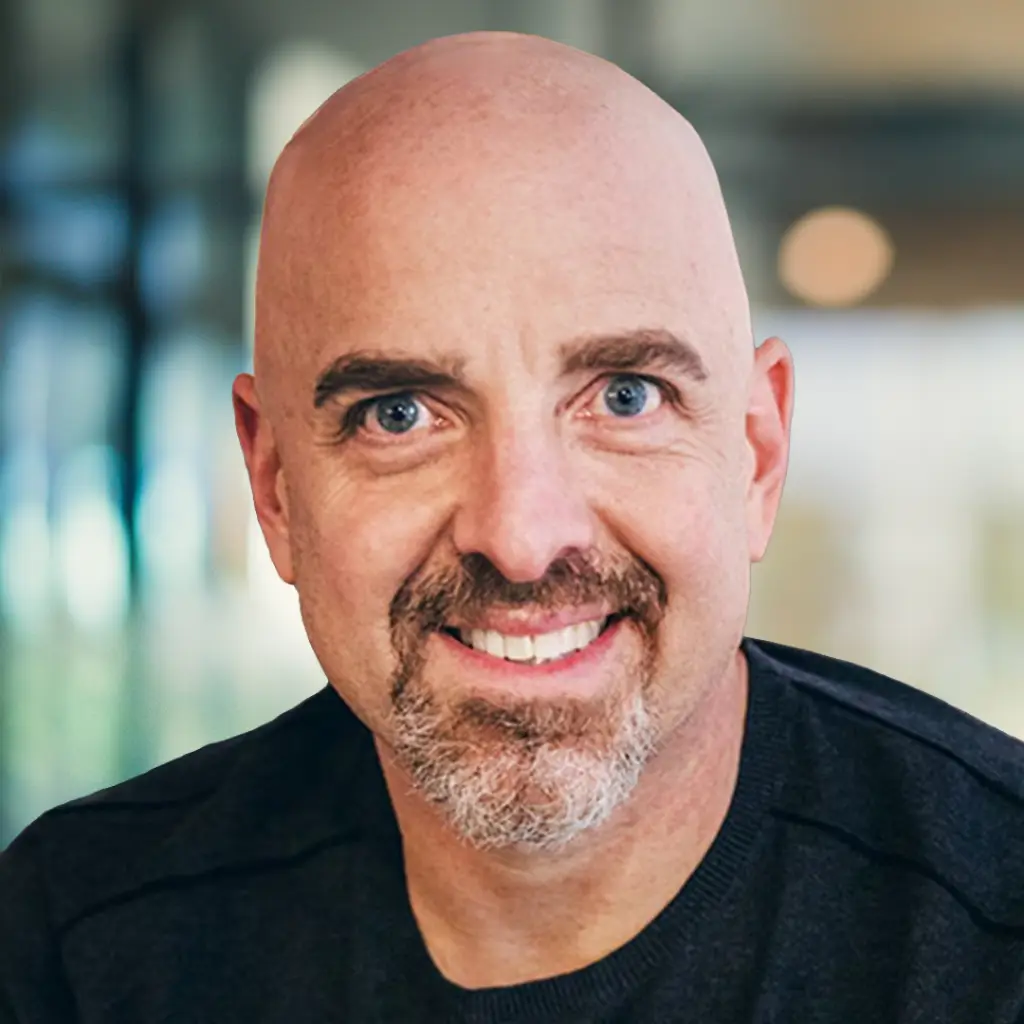
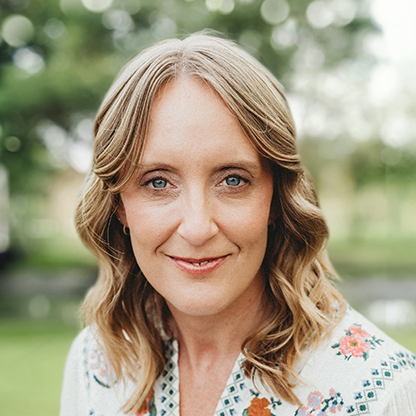
Senior Coach, Conscious Leadership Group
There is a peculiar trap built into a successful career: the better we become at something, the more we mistake it for who we are. As human beings, it’s easy to confuse competence with identity. The skills that earn us praise, trust, and opportunity gradually become the places we return to whenever we want to feel useful, valuable, or secure.
Over time, the line between what we do and who we are grows increasingly difficult to distinguish, and AI is now coming for a great deal of that “doing” work. It can do a lot of it quickly, at any hour, without tiring. This can strike fear into many, but beneath the fear lies a more interesting question that I keep returning to with my clients: When a machine can carry the work I have spent years doing, what work is really mine to do?
A Glimpse of What’s Actually Ours
Recently, I was coaching a leader who had spent 30 years relying almost entirely on her intellect. Faced with a difficult decision, she did what she had always done: She thought harder. In our coaching session, a moment occurred where she finally dropped out of her thinking mind and into her body. Her breathing slowed. Her shoulders softened. Something she had been gripping for years finally released. The clarity she had been pursuing through analysis emerged without effort. For a few moments, she was simply present, awake to what her body had been telling her long before her mind was ready to listen.
When this happens in a session, I feel it in my own body, too. Time falls away. I am, without question, doing the work I was made for. I do plenty of other things in a week. I write emails, draft retreat schedules, and build slide decks. I am good at all of it, and yet almost none of it leaves me feeling the way that one embodied moment does. For a long time, I held both kinds of work as one and the same, and it took me years to feel the difference.
Here is the trap that catches most of us: Staying busy delivers a real, immediate hit of satisfaction. Because productivity feels good, we build entire careers around chasing that feeling. But busyness and full aliveness are not the same thing. Full aliveness offers something deeper — a clarity the body recognizes long before the mind does, the kind that lets us live and work in our Zone of Genius.
The Four Zones
Gay Hendricks names four zones we work from:
- The Zone of Incompetence holds what we are bad at.
- The Zone of Competence holds what we do as well as anyone else.
- The Zone of Excellence holds what we are reliably great at, the work that built our reputation and pays our bills.
- The Zone of Genius holds the work that draws on our singular gifts and lights us up, where contribution and aliveness meet and deliver outsize impact on the world.
According to Hendricks, the seductive zone is Excellence. It pays, it earns praise, and it feels safe. Excellence is comfortable, while genius is exposing. Genius asks us to be visible, uncertain, and fully ourselves. And here is what I believe is happening underneath the noise about AI: it is climbing these zones fast. It’s already capable of handling a lot of our competencies, and now its capabilities are reaching into our Zone of Excellence — the synthesis, drafting, and analysis many of us have mistaken for genius.
Why Fear Hides Your Genius
Most of my clients feel some swirl of fear and excitement about AI taking over their zones of Incompetence, Competence, and even Excellence. On a good day, they are curious. On a harder day, they are gripped by fear, certain AI is coming for their “purpose.” When we are afraid, we narrow. We grip Excellence harder and double down on being impressive at the very things becoming automated. As we defend the different zones AI is now equipped to take, the Zone of Genius waits unexplored.
This is the gift folded inside the fear: When the machines carry the excellence we once hid, our hours return to us for our genius. The invitation is to pour them into the work only we can do — the gifts that come alive through being, where flow, impact, and our deepest vision for the world take shape.
The Most Human Work
The reality is that your genius is often hiding in plain sight because it comes so naturally, you assume it cannot be the real thing.
For me, it has taken years to realize that my Zone of Genius is embodiment, and more specifically, living in pleasure and inviting others into theirs. By pleasure, I mean being awake to your full aliveness, letting creative energy move through all five senses so you can be present, resonant, and fully here.
My work is helping leaders come home to their bodies, to feel again, to treat sensation, and even desire as real sources of intelligence and vision. I light up around this. I can feel my own energy rise as I write this sentence, which is exactly how you know you are near the zone. It generates energy rather than spending it.
It is also the least automatable thing I can imagine. No model will sit across from a frightened executive and help her find the held breath in her chest and trust what is underneath it. That takes a nervous system, a body, a presence. It takes me. The thing I was most tempted to dismiss as “soft” turns out to be the most human and most valuable work I do.
A Practice for This Week
Take a piece of paper and draw two columns.
- On the left, list what you are great at. This is the work that gives you a lift when it earns approval or the satisfaction of achievement, but that you would set aside if no one paid you to do it. This is your excellence.
- On the right, list the moments where you lose track of time, where energy rises in you and feels abundant, where you feel most like yourself, the flow state you would return to again and again simply for the joy of it. This is your genius.
Read each item slowly and feel what happens in your body. Notice where there is contraction and where there is a lift. Your body knows the difference between excellence and genius. Then, pick one thing from the left column and let something else carry it this week: AI, a colleague, an automated system. Take the hour it frees and spend it on purpose in the right column. Just one hour. See how you feel afterward.
A Different Kind of Future
AI will continue reshaping the landscape of work, and it will almost certainly become better than most of us at many of the tasks we once considered uniquely valuable. I find that clarifying. It invites us to distinguish between the work that built our careers and the work that gives them meaning, and to become more intentional about where we invest our time, attention, and energy.
My Zone of Excellence has served me well, and it always will. My Zone of Genius, however, is where I feel most alive and where I make my deepest contribution. As AI expands its capabilities, I believe it is inviting each of us to ask a more enduring question: What is uniquely mine to do? The answer is unlikely to be found in producing more. It lives where our gifts, our humanity, and our full aliveness come together in service of something only we can offer.